
The Small White, Pieris rapae
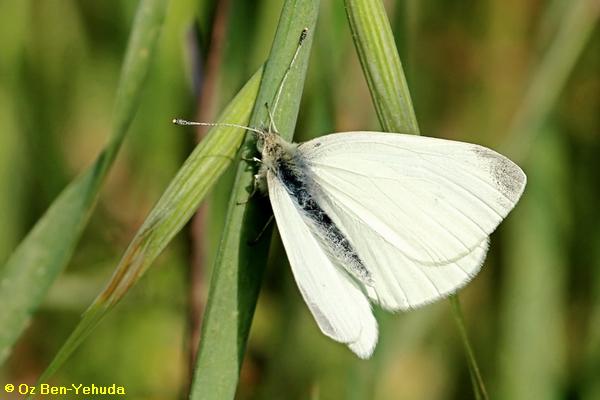
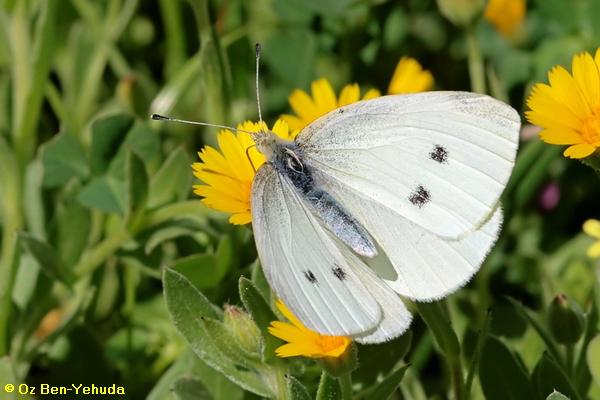
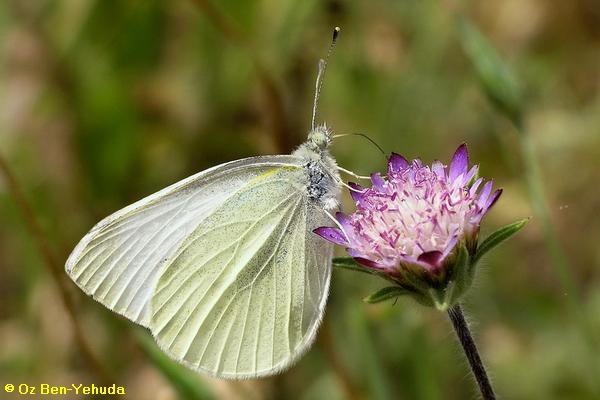
The Small White is a small to medium-sized butterfly of Palaearctic origin (Europe, temperate Asia and North Africa). It has spread to North America and Australia. In Israel it is common throughout the country except for the extreme desert, all year round. It is the most common butterfly near humans, in ornamental gardens and in agricultural areas. Its wingspan is up to about 45 mm. The female, in addition to the spots on the underside of the forewing, also has two round spots on the upper side of the forewing. It resembles the Green-veined White. In the Small White, the overall background of the underside of the hindwing is yellowish, whereas in the Green-veined White the background is white and the wing veins are green.
The female lays the eggs on radish, cabbage and other crucifer species, as well as on wallrocket and caper. The egg is yellowish white.
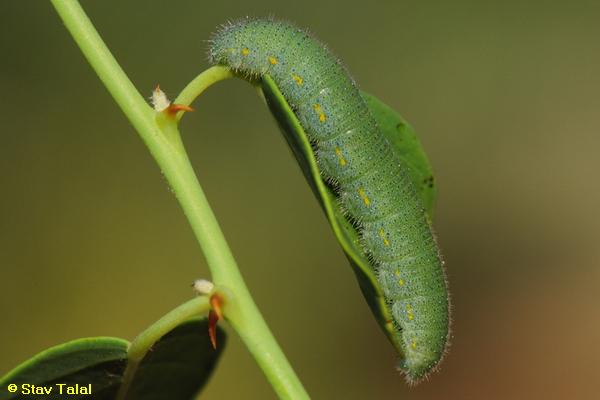
The larva that hatches is yellowish, and after molting its color turns green with a thin pale line לאורך its back. It has very short white hairs and is well camouflaged among the host plant leaves and is hard to find. Its maximum size is about 30 mm, and it pupates, usually on the host plant.
The pupa is about 20 mm in size and is green or light brown, delicately striped with yellow. The pupal period depends very much on the weather (from a week in summer to a month in winter).