

Butterfly Garden
The colorful butterflies flying in ornamental gardens add color, beauty, and movement to the environment. In addition, butterflies, as nectar suckers, pollinate and fertilize garden plants. A garden that provides for the needs of butterflies will attract many butterflies to it.
Butterflies belong to the order Lepidoptera in the class Insecta. They appear mainly in spring and summer, and their appearance declines in autumn, toward winter. All have a similar life cycle with four stages: egg, larva, pupa, and adult butterfly. The female butterfly lays her eggs, usually, on a limited number of host plants (usually from the same family). When the larva hatches from the egg, it feeds on the plant’s leaves and grows until pupation. From the pupa emerges the adult butterfly, which feeds on nectar from nectar plants and sometimes on juices of rotting fruit.
Below are useful tips for attracting butterflies to the garden:
Choosing the site
1. Butterflies (the vast majority) and plants prefer sunny places (at least 5-6 hours a day). The brighter the place, the longer the butterflies’ period of activity will be (the males - for nectar feeding and searching for females; the females - for nectar feeding and egg laying)
2. On the other hand, butterflies also need shaded places to rest during the hot hours of the day (a dense shrub can serve as a place of refuge from the sun and as a place to rest at night)
3. Butterflies need sheltered places for night roosting as well as protection from predators while resting
4. In other words, the site must be diverse in its microclimates, so that each species will find its place in the site at all hours of the day
5. The site should be in a place protected from wind (a dense row of shrubs can serve as a windbreak). Wind cools the butterflies and causes them to expend more energy while flying
6. It is important that the site be, as much as possible, a place isolated from people
Planting plants
1. Nectar plants (which provide food for adult butterflies) should be planted in order to attract many butterflies.
2. Host plants (which serve as food for the larvae) should be planted, on which the butterflies can lay their eggs. The host plants should be suitable for the butterflies present in the garden’s surroundings.
3. The host plants should be planted in isolated and hidden places.
4. It is worthwhile to plant trees, shrubs, perennials, and annuals.
5. The vegetation, height, flower shape, and color should be varied (some species prefer tall plants and some prefer, דווקא, low ones).
6. The tall vegetation should be planted in the back and the low vegetation in front.
7. The plants should be planted in groups of the same species, and in a uniform color, to create color blocks.
8. The plants should have a large number of flowers.
9. Flowering should be ensured throughout the entire season.
10. It is worthwhile to add several pots to increase the flexibility of the plant variety.
11. Butterflies are mainly attracted to:
Orange, yellow, and purple flowers, as well as pink, red, and white ones.
Flowers with a single inflorescence rather than a double one
Flowers with a flat surface on which they can land (therefore, flowers that are too small are not recommended).
Flowers with a small tube, so that they can reach the nectar at the bottom of the flower using their proboscis.
12. Butterflies are not usually attracted to large flowers (which in many cases have little nectar).
13. It is worthwhile for some of the garden flowers to be from the local wild vegetation. The butterflies in the area have lived for many generations on the nectar of these local flowers.
14. In many cases, cultivated flowers have little nectar and are not preferred by butterflies.
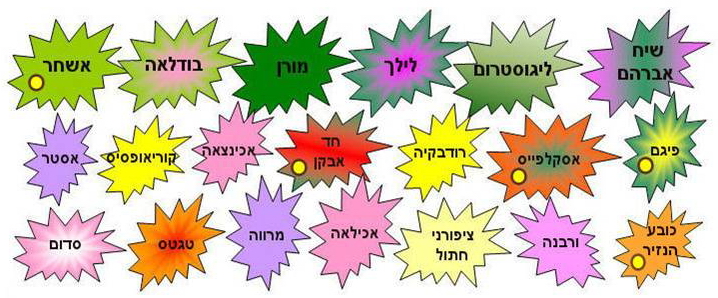
15. Nectar plants (partial list):
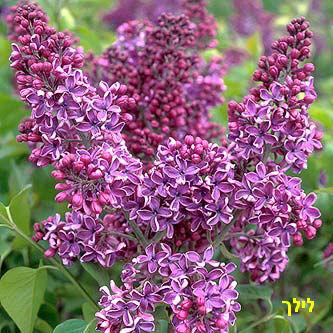
Trees and shrubs - Moran ha-horeš, lantana, heba, lilac, honeysuckle, rosemary, single-anther, common rue, Buddleia, thymus, Spiraea, Clerodendrum, Bidens, Plumbago, Ligustrum, Abraham’s shrub, Duranta, and more.
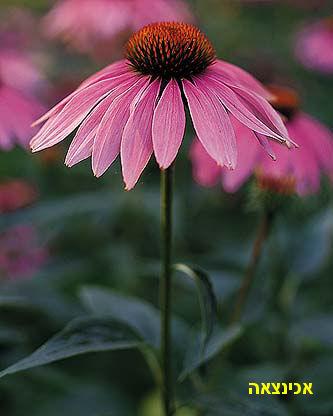
Annuals and perennials - aster, echinacea, salvia, Tagetes, zinnia, Coreopsis, ragwort, lavender, blue scabious, cosmos, chrysanthemum, Liatris, manthor, nasturtium, Agapanthus, bear’s ear, Asclepias, Eschscholzia, verbena, Vitegdenia, lobelia, Solidago, marigolds, Rudbeckia, thymus, Achillea, Liatris, Agerton, Sedum, Veronica, Trachelium, shalev, and more.
Miscellaneous
Many butterflies drink water and absorb minerals and salts from muddy puddles (Puddling). Therefore, it is advisable to provide a muddy spot in a sunny area in a corner of the garden. There are species that are attracted to the droppings of predatory animals, which are rich in minerals and salts. There are species in which the males cannot fertilize the females without these minerals and salts. This phenomenon has not yet been observed in Israeli species.
Butterflies cannot regulate their body temperature, and on cold mornings they perform basking (standing facing the sun to absorb heat, sometimes accompanied by fluttering the wings to raise body temperature). Large, flat stones should be provided to allow this. These stones absorb the sun’s rays and emit heat, thereby helping the basking process. In addition, these stones can also serve as sites for searching for females. Large, flat leaves or flowers can sometimes serve as a substitute for stones.
It should be ensured that the garden has lookout points for male butterflies. At these points the males stand and search for females (this place is also good for basking). It is worthwhile to add pieces of fruit (apples, oranges, bananas, peaches, and more) as an additional food source.
It is worthwhile to add nectar substitutes (sugar, honey, and fruit syrup diluted with water).
It is worthwhile to add a long box that will serve as shelter in winter, for species that undergo hibernation (winter dormancy).
Pesticides (pestisides) that harm insects should not be used.
Butterflies should be observed to see which plants they visit and which they ignore, and accordingly the composition of plants in the garden should be changed.
The more natural the place is, the more butterflies will visit it.
Photos of nectar plants were taken from the following websites:
http://www.floridagardener.com – Asclepias
http://www.marthastewart.com – all the rest