Mammal sightings, 30/08/2022
At the end of August, sightings and reports are received and processed in the system every day. Among other things, sightings were recently updated for the following mammal species (in chronological order of the classification date in the system:
Badger European Meles meles
number of sightings, including a roadkill report south of Mevo Hama (Avi Tzuran, 20/08/2022).
Rock hyrax Procavia capensis
reports continue to be received at an increasing frequency from populated areas (list regarding:hyraxes, hedgehogs and jackals).
Egyptian fruit bat Rousettus aegyptiacus
Wild boar Sus scrufa
reports from the Carmel area
Greater mouse-tailed bat Taphozous nudiventris
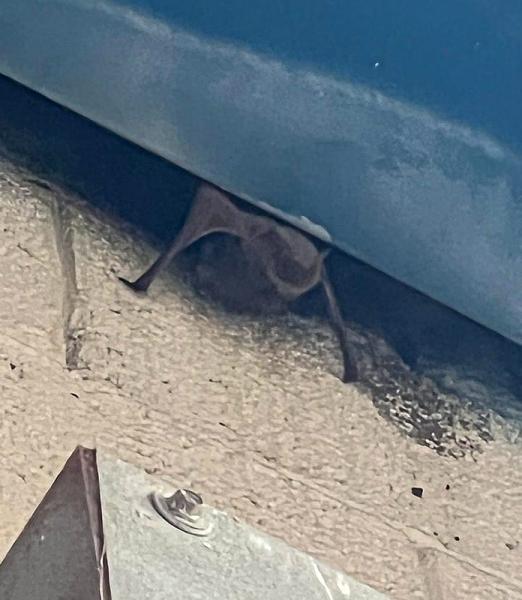
The mouse-tailed bat is one of the largest bats in the region. Reports of sightings have been published here from many areas in the country, including the center of the country and the coastal plain: last night it was recorded in Mazkeret Batya. We expected to find relatively quickly where this large and strong crevice-dwelling bat spends its day, since it was reasonable to assume that it may also roost in residential buildings. However, since the species was identified in Rehovot, it has been documented only during nocturnal activity. When it was identified during the day, it was usually as a single individual: a colony of mouse-tailed bats, as described in the literature, was not found. Where does it roost? Is it in sites similar to those where horseshoe bats are known? Perhaps in mixed colonies with other crevice-dwellers?
Noam Atar first reported to us a large colony of mouse-tailed bats at a built site in the Ashdod area. The site is unusual in several respects; it seems that the most notable is that it is relatively exposed and visible to people. We are used to finding bat colonies in the roofs of old houses and in ruins, for example, but here the mouse-tailed bats chose a noisy industrial building bustling with people. This is a closed site, and entry was conditional on approval and accompaniment. Meanwhile, no additional sites in the area have yet been surveyed, but at least at first glance many of the conditions seem similar. The recordings and additional findings from the site have not yet been analyzed. Many thanks to Noam for his attention and help.
Jackal Golden Canis aureus
Striped hyena Hyaena hyaena