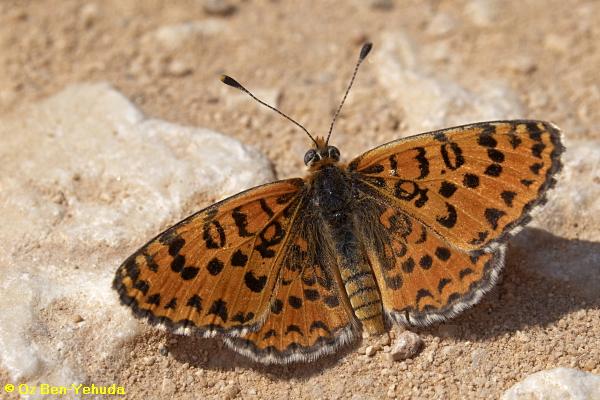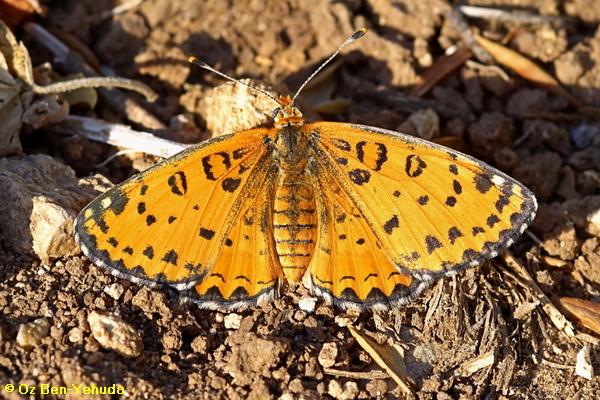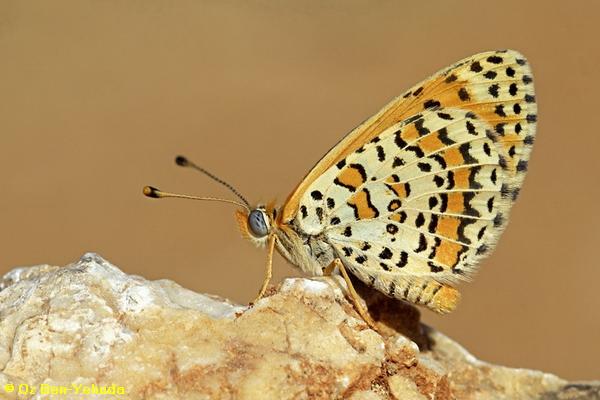

Mullein Fritillary Melitaea trivia
A small butterfly common from southern Europe to Iran and Pakistan. In Israel it is common throughout the Mediterranean region and in the high mountains in the Negev, from March to November. Its wingspan is up to about 35 mm. It produces several generations in the lowlands; in the cool mountains it produces only one generation. A butterfly that resembles Knapweed Fritillary in general appearance. In Israel there are additional species of the genus Melitaea, most of them common in the north of the country, and distinguishing between them is difficult.
The female lays dozens of eggs on the stems of mullein and figwort or on stones beneath them. The egg is greenish in color.
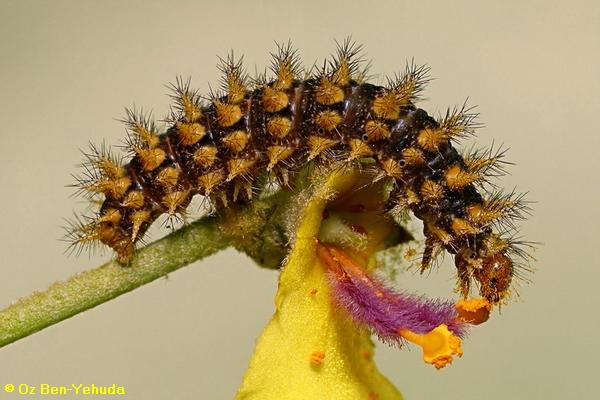
From the egg hatches a hairy larva, cream-colored with a dark head. As it grows, its color turns black and it develops orange tubercles from which dark bristles emerge. Its maximum size is about 25 mm, and it usually pupates on stones near the host plant. The larvae of the last generation (June – in the cool mountains; November – in the lowlands and warm areas) undergo winter diapause until January.
The pupa is about 15 mm in size. Its color is pale and it has orange and black spots. The pupal stage lasts from two weeks to about a month.
*Former name: Mullein Fritillary